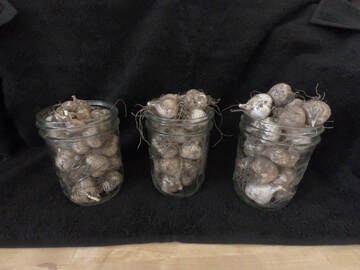
 Sometimes it is easier to just start over, sometimes it is worth the time and effort to rehabilitate things. The garlic of our garden is one of those things that I’ve decided will be worth the effort to rehabilitate.
Several years ago now, we moved to this area from Pennsylvania. We brought with us, like the travelers of old, some of our prized seed. For us it came in the form of the two varieties of garlic we grew which were on their 5th or 6th season. We had come to love one variety in particular simply for its ease of use. It kept well, was fairly easy to peel, and only a clove was needed for most recipes because the cloves came the size of two thumbs, one layer deep about 5-6 to a bulb. The only draw back being we had to reserve 20% of the crop for replanting. When we arrived in Nebraska, a bed was prepared early in the spring, the garlic was planted, and then tended to for a year. Then we realized that the full weight of keeping up with twins and school during the summer was going to mean not keeping up with a garden. So the garlic has grown for the last 6 years, and divided for the last sux years, and though it looked like a weed patch, I kept mowing around it and letting it grow for another year. This spring, as a major part of preparing The Forming Spirit, the garden was brought back into our life. Beds were prepared, and in a section of them, an experiment was tried. The garlic which had been growing and dividing, and growing and dividing was carefully dug up, separated into what I hoped were the two varieties we had brought, and then the best plants of each variety were chosen and planted in the garden, with room to put down roots, water to help them grow, and plenty of light all to themselves. I will report, they did not come roaring back to life like I hoped that they would and a few of them didn’t make it. Most of them did though, and upon harvest, they had produced small bulbs of garlic, with small cloves. I probably won’t be eating much of it this year, but what I have to plant for next year is larger and healthier than what I started with this season, which will, I hope, produce a crop that is larger and healthier again. This is the nature of rehabilitation, it takes time, several seasons perhaps, to undo the neglect something has gone through, to fix the brokenness that is present. It is, in many ways, the more difficult path to take. It is also the path though, of hope, and of relationship, and of love.
0 Comments
With Lent over, but social distancing guidelines still in place, in partnership with Tri-Saints Lutheran Parish, we will be offering Evening Prayer on Wednesdays at 8PM for the foreseeable future. Join us via zoom here. You can also worship with Evening Prayer by yourself or lead a group of your own with the service on The Forming Spirit website.  Living where we do, there is a small problem, “hot” wells. What this means is there are high levels of nitrates that have been found in them from too many years of over-fertilization. Though this practice has been curbed over the last couple of decades, the nitrates will be in the ground water for a while. The way to remove them and other things that might be in the water is a reverse osmosis system. Thanks to a generous donation from a family whose loved one had recently died, St. Peter was gifted with a new system. It will serve the needs of the congregation for Sunday School and funerals and will meet the day to day needs of The Forming Spirit for years to come. Getting started with a counter full of parts. 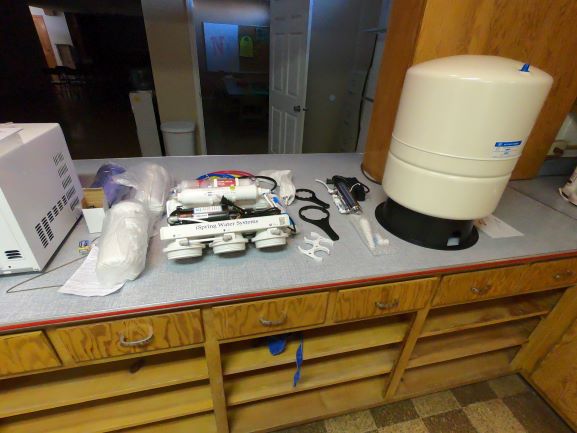 Getting the water supply hooked up was a lot easier than the last time I installed one of these. 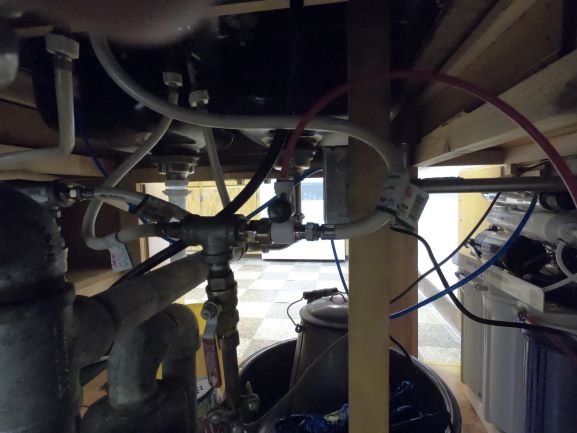 A big tank was a must but it made for a tight fit. 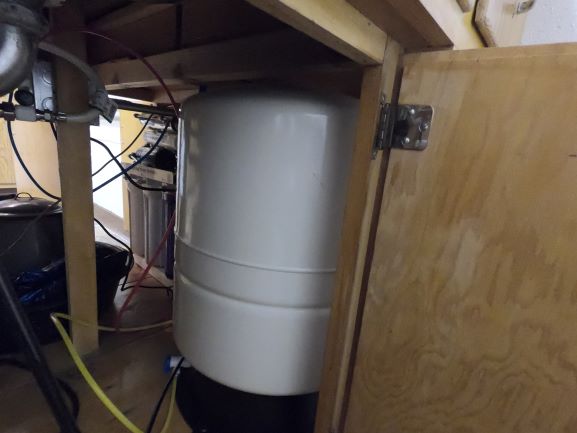 A morning's worth of work got the water running. 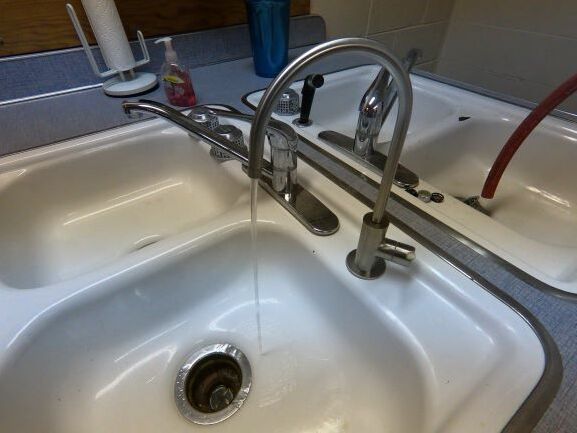 Tastes great! Lots of it!
Many people have been hard at work this last month getting the Parsonage in town and the church building in the country ready to receive students this fall. In many ways, it was a lot of small projects that added up to some big ones. I helped my wife get her office in order and rearranged. Her desk was moved, her books rearranged, and her church crafting supplies were organized. Part of that was getting some shelving put together. Next on the list is a work table. All of this work in her office has prepared the way to begin getting the rest of the house ready for the students who God is preparing to come. To that end, I spent a good deal of time getting a washer and dryer hooked up (both are fully functional now). A seal is on order and then it will be a quick five minutes until the dishwasher is ready to go. The new aerator on the kitchen faucet is working well too. 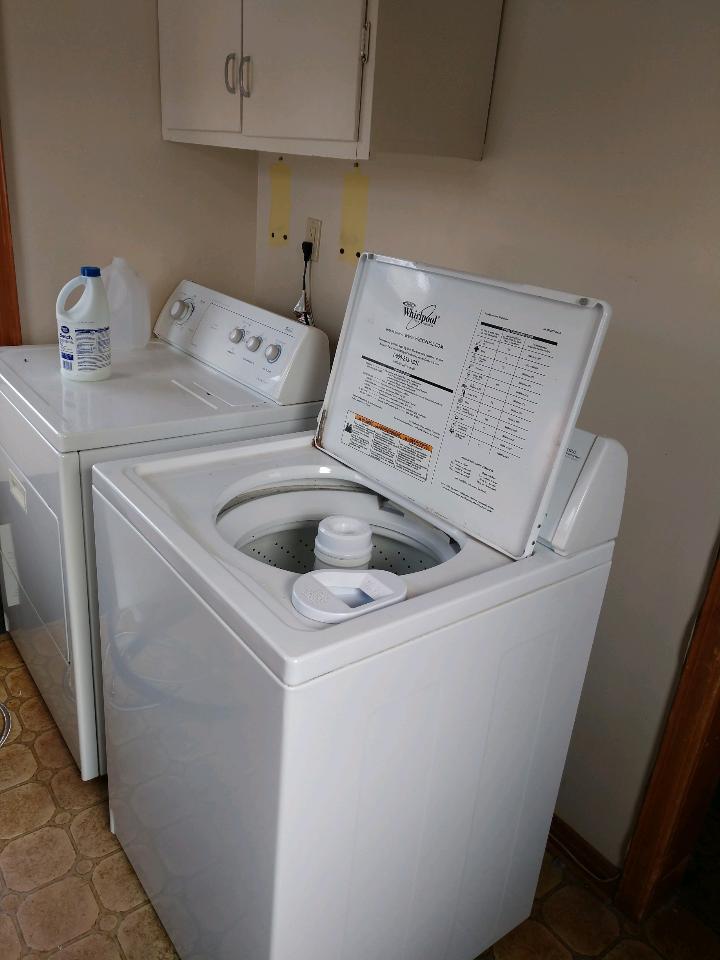 Upstairs, furniture has been moved and bedrooms are beginning to take shape. I owe a good deal of thanks to my friend David who came and helped move stuff around. I especially owe him for the help with moving an old steel desk all the way to the basement. It was a beast of a desk but we made it without injury or incident. Getting the furniture we have in place has helped me begin to see what is still needed. I’m also very thankful because I know most of what I need has been offered already. 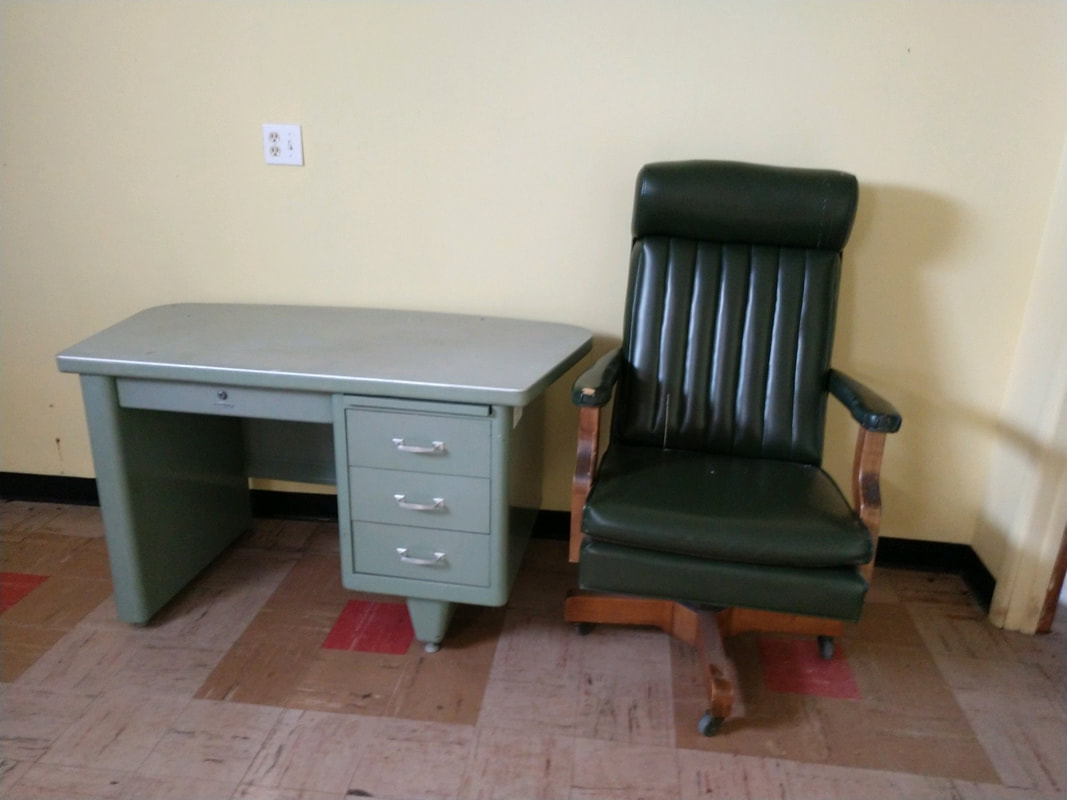 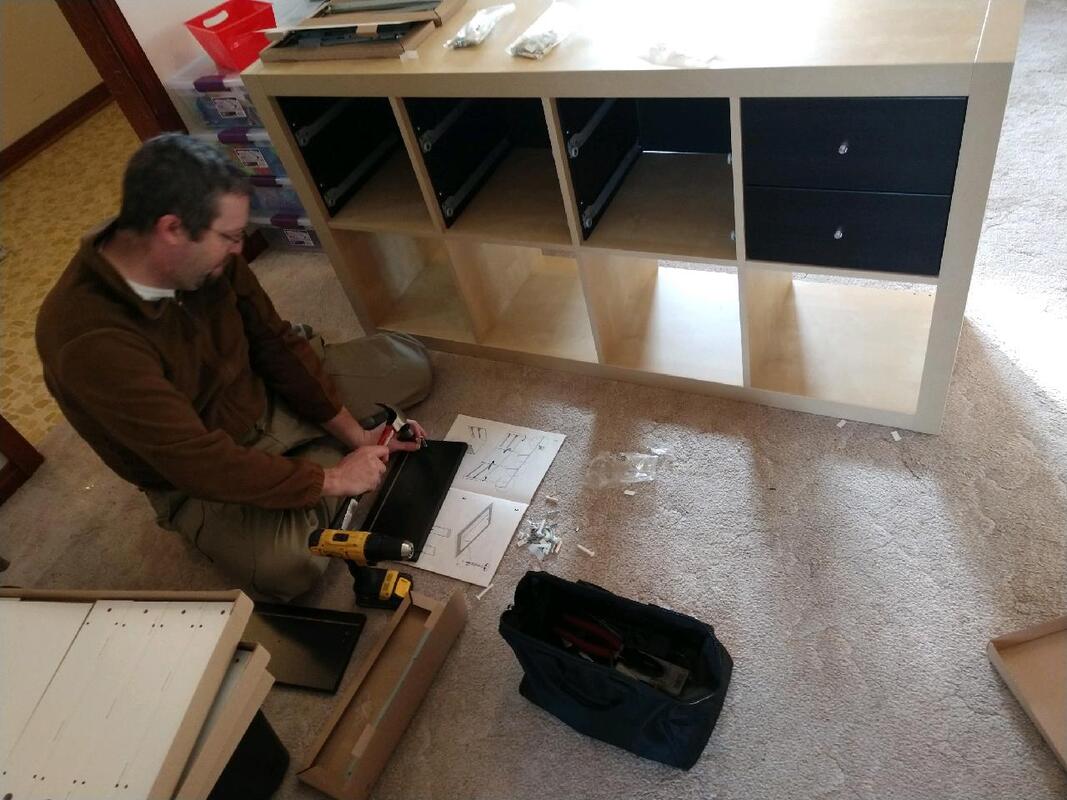 Not much has gone on at St. Peter this month but, I am grateful to Moeller Electric for running a short electrical line so that work can proceed next month. This receptacle under the sink will allow the dishwasher and reverse osmosis system to have power. Watch this space in the coming month for the projects related to that. 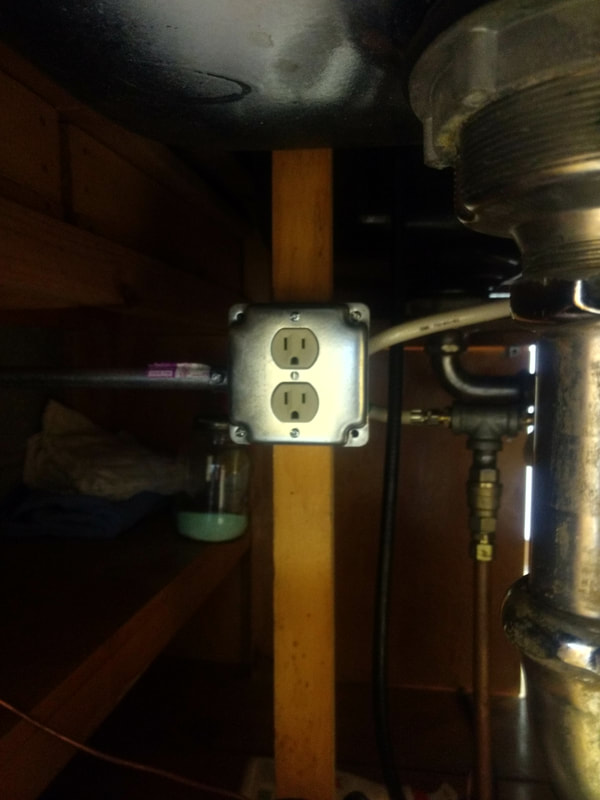 |
AuthorPatrick Sipes is the founder and director of The Forming Spirit. You can learn more about him here. Archives
December 2020
Categories |
 RSS Feed
